Every child with autism experiences the world differently. Your child may love movement but find getting dressed difficult, have great ideas but struggle to get them onto paper, or need extra support participating in certain routines and activities.
Occupational therapy focuses on the everyday things your child wants and needs to do. Rather than taking a one-size-fits-all approach, an occupational therapist looks at your child’s individual strengths, needs, and daily routines to determine where extra support could make life easier.
Here are five areas occupational therapy can help children with autism.
Sensory Processing
Sensory processing is how your child’s brain receives and responds to information from their senses.
Children with autism can experience sensory information differently. Your child might be particularly sensitive to sounds, lights, textures, tastes, or touch. They might also seek additional sensory input through activities like jumping, spinning, crashing, chewing, or touching objects.
An occupational therapist can help you understand your child’s individual sensory needs and find strategies that support their comfort and participation. That could mean finding ways to make getting dressed more comfortable, preparing for a noisy environment, or incorporating movement into your child’s day.
Dressing and Other Daily Routines
Getting dressed, brushing teeth, washing hands, bathing, eating, and using the bathroom are all activities of daily living.
These routines can involve sensory processing, motor skills, coordination, and other skills. If one or more parts are difficult for your child, an occupational therapist can help determine what’s getting in the way.
OT can help your child practice individual skills, break routines into more manageable steps, and use strategies or adaptations that support greater participation and independence.
Fine Motor Skills
Fine motor skills are the small movements your child makes with their hands and fingers. Your child uses these skills to hold a pencil, use scissors and utensils, fasten clothing, open containers, manipulate toys, and complete many school and self-care activities.
Occupational therapy can help your child develop hand strength, coordination, and control through activities that are engaging and meaningful to them.
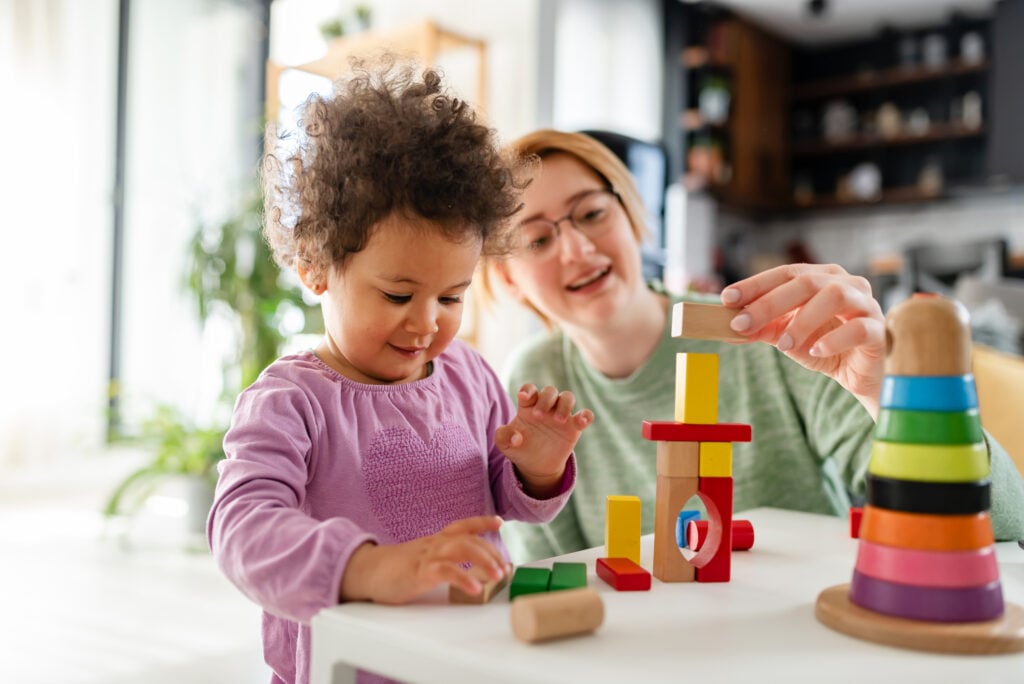
Therapy might include drawing, crafts, building toys, puzzles, games, or other activities that get their hands working while they play.
Motor Planning and Body Awareness
Motor planning is your child’s ability to figure out, organize, and carry out the movements needed to complete an activity. Body awareness helps them understand where their body is and how it’s moving.
These skills can affect activities such as getting dressed, learning a new playground activity, or figuring out how to move their body through a new environment.
An occupational therapist can give your child opportunities to practice new movements and activities in ways that match their abilities, helping them become more confident when figuring out what their body needs to do.
Play and Participation
Play gives your child opportunities to explore their interests, practice skills, solve problems, and connect with other people.
An occupational therapist can help remove barriers that make it harder for your child to participate in the kinds of play and activities they enjoy.
The goal isn’t to teach your child to play in one particular “right” way. It’s to help them participate more fully in activities that are meaningful and enjoyable to them.
Supporting Your Child in Everyday Life
Occupational therapy for children with autism isn’t about changing who your child is. It’s about understanding what helps them participate comfortably and successfully in everyday life and building the skills they need to do more of the things that matter to them.
At Building Futures, our pediatric occupational therapists work with children and families to create individualized goals based on each child’s strengths and needs. Whether your child needs extra support with sensory processing, self-care, fine motor skills, movement, or play, we’re here to help them build skills and greater independence.