When you think about speech therapy, you might picture a child practicing speech sounds or learning new words. But speech-language pathologists also help children develop another important part of communication: using language to connect and interact with other people.
Children with autism can communicate in many different ways, and every child has their own strengths, preferences, and support needs. For some children, differences in social communication can make it harder to start a conversation, join a game, understand what another person means, or communicate what they want others to know.
Speech therapy can help your child build social communication skills that make it easier to connect with other people in ways that work for them.
What Are Social Communication Skills?
Social communication is how we use verbal and nonverbal communication when interacting with other people.
These skills help your child do things like start an interaction, take turns during a conversation, stay on a topic, ask and answer questions, communicate during play, and recognize when a misunderstanding has happened.
Social communication can also involve understanding gestures, facial expressions, tone of voice, humor, figurative language, and information that isn’t stated directly. Children with autism can have different strengths and challenges in these areas.
Speech therapy focuses on the skills that are important to your individual child’s everyday communication.
What Social Skills Can Speech Therapy Work On?
Your child’s goals will depend on what they want and need to communicate, but a speech-language pathologist may work on skills such as:
Starting and Joining Interactions
Your child may want to talk or play with someone but have difficulty figuring out how to get started. Speech therapy can help them practice different ways to initiate an interaction, ask to join an activity, invite someone to play, ask a question, or share something they’re interested in.
Having Back-and-Forth Conversations
Conversation involves listening, responding, sharing information, and giving the other person opportunities to contribute.
An SLP can help your child practice conversational skills such as:
- Taking turns
- Introducing or changing topics
- Asking follow-up questions
- Recognizing when they need to give someone more information.
Communicating During Play
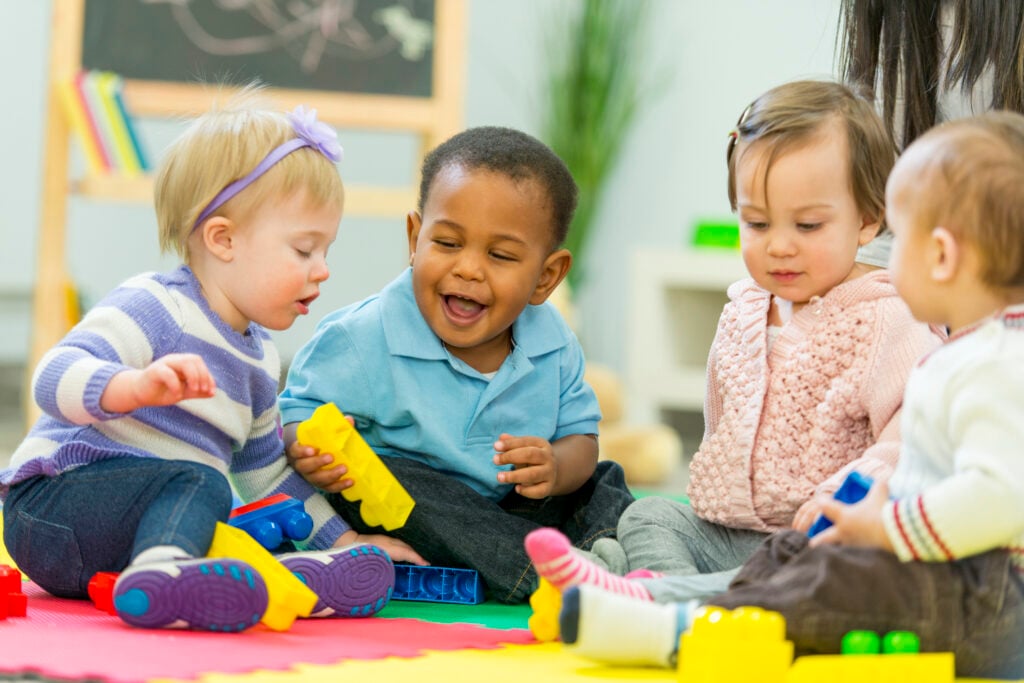
Play gives children lots of opportunities to practice communicating with other people.
During therapy, your child might practice asking for a turn, sharing an idea, making a plan with another child, negotiating what happens next in a game, or communicating when they want to do something differently.
These skills can make it easier for your child to participate in activities with siblings, classmates, and friends.
Understanding What Other People Mean
Sometimes what a person means isn’t contained entirely in the words they say. Depending on your child’s needs, speech therapy can help them understand things like:
- Tone of voice
- Gestures
- Facial expressions
- Humor
- Figurative language
- Sarcasm
The goal isn’t to teach your child that there’s only one “correct” way to interpret or respond to another person. It’s to give them more tools for understanding what others are trying to communicate.
Handling Communication Breakdowns
Even skilled communicators misunderstand each other sometimes.
Your child might not understand what someone said, or another person might misunderstand your child. An SLP can help your child develop strategies for these moments, such as asking for clarification, explaining something another way, or letting someone know they didn’t understand.
Learning how to repair these communication breakdowns can help your child communicate more effectively without expecting them to get every interaction “right” the first time.
Helping Your Child Connect Through Communication
Social communication isn’t about teaching your child to behave exactly like everyone else. It’s about helping them build communication skills that make it easier to express themselves, participate in activities, and connect with the people who are important to them.
At Building Futures, our speech-language pathologists provide individualized support based on each child’s strengths and communication needs. If your child with autism needs extra support developing social communication skills, we’re here to help them find more ways to communicate, participate, and connect.