From navigating the playground to getting dressed in the morning, your child relies on balance and coordination throughout the day. These skills help them move safely, participate in activities, and complete everyday tasks with greater independence.
Balance and coordination develop gradually as children grow and gain movement experience. However, some children need help building these skills. Knowing which signs to watch for can help you determine when your child may benefit from additional support.
The Difference Between Balance and Coordination
Although balance and coordination are separate skills, they work closely together. Your child needs both to adjust their movements, respond to changes in their surroundings, and complete activities safely and successfully.
Balance is your child’s ability to maintain control of their body while staying still or moving. They use balance when sitting upright in a chair, standing on one foot, walking across an uneven surface, or recovering from a stumble.
Coordination is your child’s ability to use different parts of their body together in a smooth, controlled way. It allows your child to coordinate their arms and legs when running, catch a ball with both hands, pedal a bicycle, or use one hand to hold paper steady while the other writes.
How Balance and Coordination Affect Everyday Movement
Balance and coordination support much more than sports and active play. Your child uses them at home, at school, and in the community.
These skills help them:
- Walk, run, jump, climb, and use stairs safely
- Participate in playground games, sports, and physical education
- Sit upright and maintain a stable position at a desk
- Get dressed, put on shoes, and complete other self-care tasks
- Carry objects without dropping them or losing their balance
- Move through crowded or uneven spaces with greater control
Signs Your Child May Need Support With Balance and Coordination
Every child develops at their own pace, and young children naturally fall and stumble as they learn new movement skills. However, when balance and coordination require more effort, your child might avoid playground equipment, hesitate to join group games, or depend on an adult for tasks they want to do independently.
Your child may need extra support with balance and coordination if they:
- Fall or trip often during everyday play
- Have difficulty standing on one foot, hopping, or jumping
- Struggle to catch, throw, or kick a ball
- Have trouble coordinating their arms and legs while running
- Avoid climbing, playground equipment, or active games
- Move cautiously or seem unsure during physical activities
- Have difficulty keeping pace during physical activities
- Need additional support using stairs or moving across uneven surfaces
How Pediatric Physical Therapy Helps Improve Balance and Coordination
A pediatric physical therapist can evaluate how your child moves and identify which skills may need additional support. Then they will create an individualized therapy plan based on your child’s age, abilities, and goals.
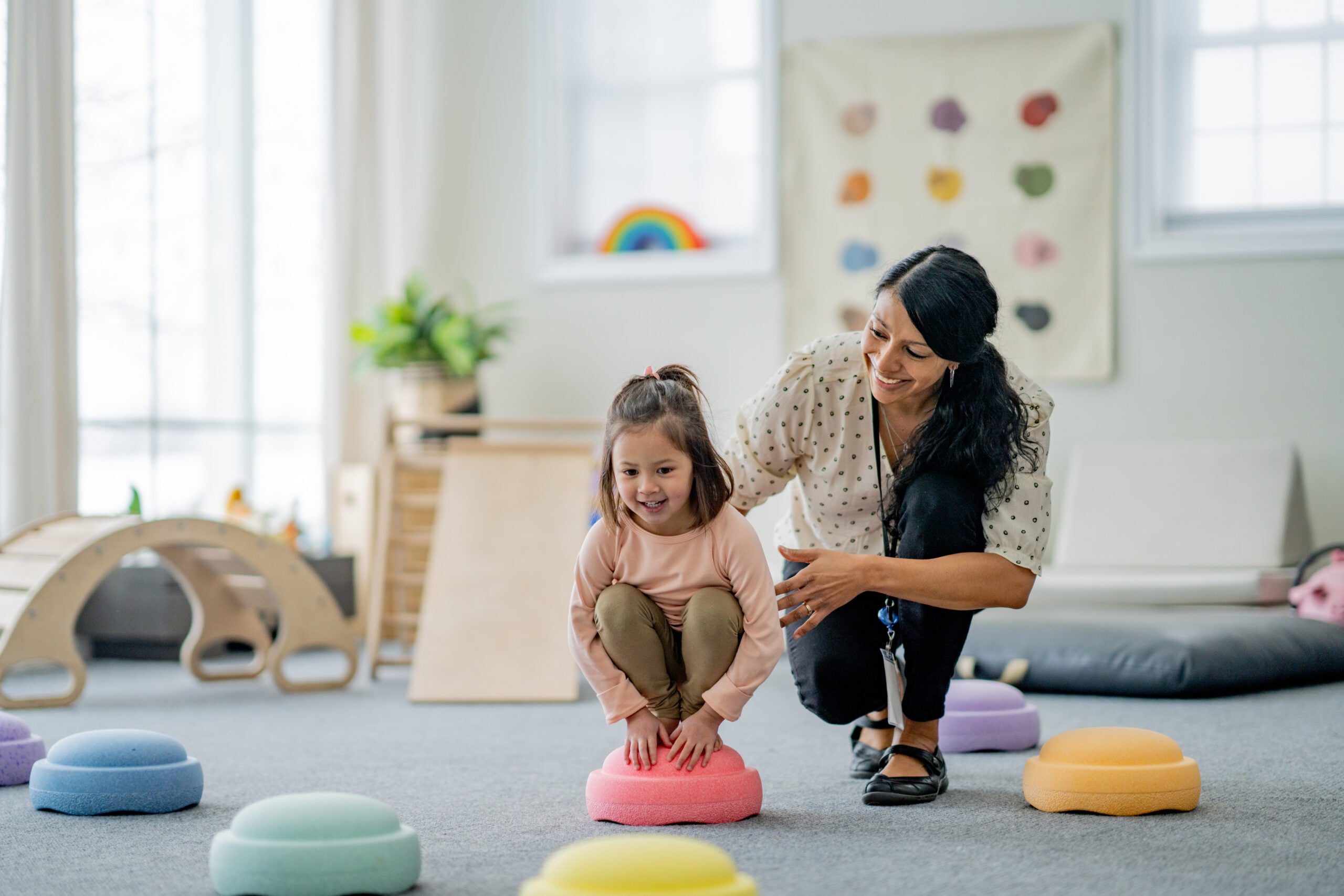
Because children learn through play, therapy may include obstacle courses, balance beams, ball games, hopping, climbing, or activities that require your child to change direction and adjust their movements. These activities can help build core and leg strength, improve body awareness, and give your child practice coordinating their movements in a supportive setting.
Your child’s therapist may also suggest activities you can practice at home. Simple games such as playing catch, walking along a line, dancing, or creating a backyard obstacle course can give your child enjoyable opportunities to strengthen these skills.
Reach Out to Building Futures for Support
If balance or coordination difficulties are making it harder for your child to participate in everyday activities, Building Futures is here to help. Families in the Monroe, West Monroe, or Ruston, LA, areas can call one of our locations or fill out our online form to schedule an evaluation.