From your child’s first smile to their first conversation, they’re not just learning new words. They’re also developing the thinking, movement, social, and play skills that make meaningful communication possible.
Because all areas of development are connected, growth in one area often supports growth in another. Understanding these connections can help you recognize how your child’s everyday experiences contribute to stronger speech and communication skills.
Everyday Moments That Build Communication Skills
Long before your toddler forms real sentences, they’re already rehearsing conversation, just through play instead of words.
Think about the game of rolling a ball back and forth, or peekaboo. Your child waits for their turn, watches your reaction, then responds. That’s the exact same rhythm a real conversation runs on: listen, respond, wait, listen again. When your child figures out how to stack blocks so they don’t fall over, they’re building the same thinking skills they’ll later use to ask questions, explain ideas, and learn new words.
Other examples include:
- Fitting shapes into the right holes: your child is building problem-solving and sorting skills. Those same thinking skills later help them understand words like “big” versus “small” and follow simple directions.
- Sharing a toy, waiting their turn on the swing, or offering a hug when they notice you’re upset: your child is learning the give-and-take of social interactions, an important foundation for meaningful conversations.
- Reaching, pointing, or waving before they have the words for what they want: your child is learning to communicate intentionally before they’re able to say the words out loud. Those early gestures often become the foundation for spoken communication.
- Turning the couch cushions into a boat or lining up cars and naming each one: your child is building imagination and symbolic thinking, the same skills that help them connect words with ideas and experiences.
Signs Your Child May Need Support With Communication Skills
There’s no single timeline every child follows. Some children are chatting in full sentences early on; others spend more time watching, listening, and pointing before the words show up, and both are common. Rather than focusing only on how many words your child says, it often helps to look at the whole picture: how your child plays, connects, and problem-solves alongside how they talk.
However, if your child consistently displays the following signs, you may benefit from reaching out for an evaluation with a pediatric speech therapist:
- Has difficulty understanding age-appropriate language
- Uses fewer words than expected for their age
- Has difficulty combining words into phrases or expressing ideas
- Becomes frustrated when trying to communicate
- Has difficulty interacting with family members or peers
Early support can help identify your child’s strengths, address challenges, and provide practical strategies that encourage continued communication growth.
How Speech Therapy Supports Your Child’s Development
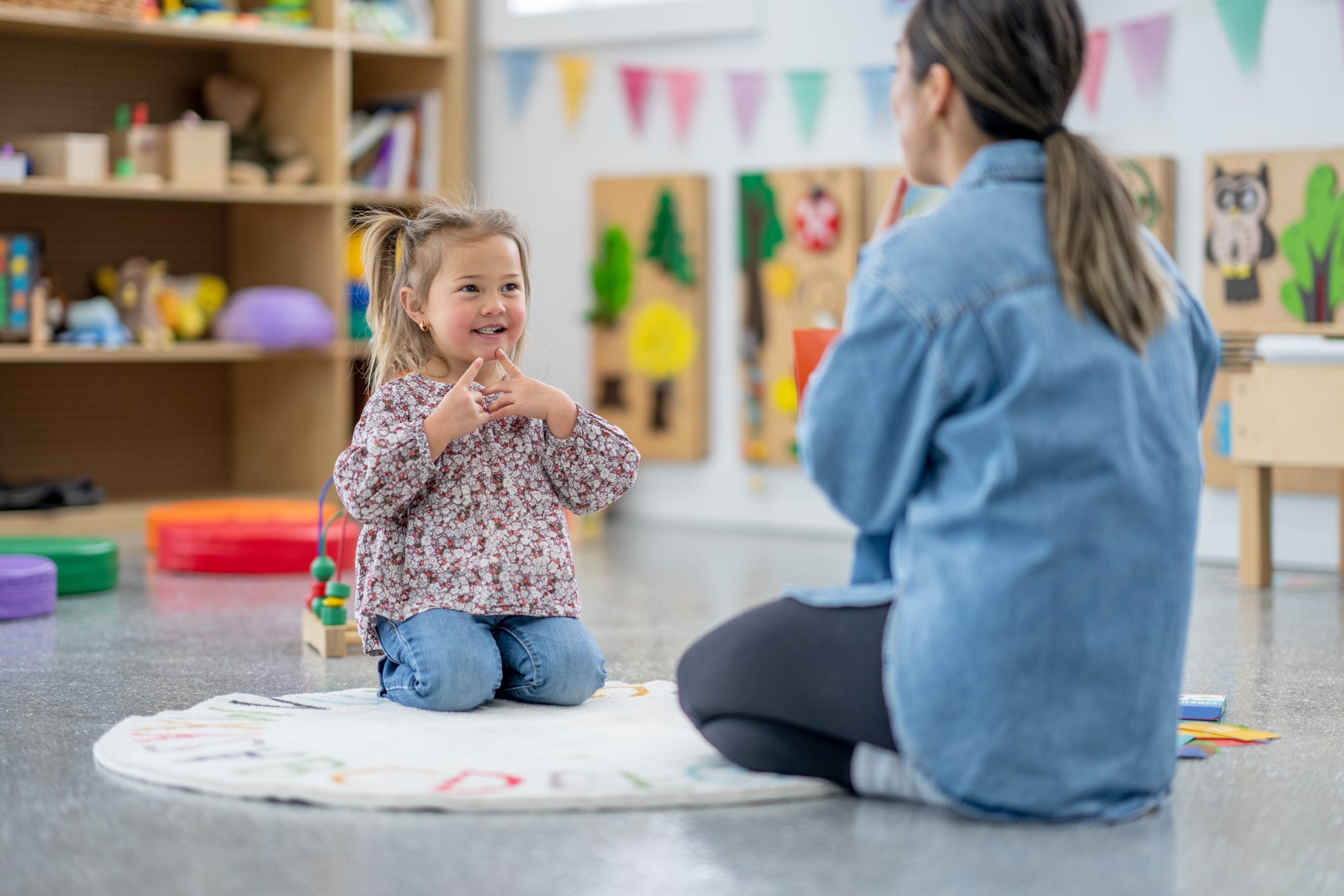
Speech therapy doesn’t focus only on words. A pediatric speech therapist looks at the whole child—how they play, move, and connect—and builds on those strengths to help your child find their voice.
Sessions look more like play than “therapy”: stacking blocks, reading a favorite book, pretending together. Through it, your child practices understanding language, expressing what they want, and connecting with the people around them.
Your child’s therapist will also give you ways to keep that momentum going at home, so practice happens naturally, all week long.
Reach Out to Building Futures for Support
If you would like to learn more about how speech therapy can support your child’s development and live in the Monroe, West Monroe, or Ruston, LA, areas, Building Futures is here to help. Call one of our locations or fill out our online form to schedule an evaluation.