
Finding out that your baby or child has hip dysplasia can leave you with plenty of questions. What does it mean? Will they be able to crawl and walk normally? What treatment will they need? And where does physical therapy fit in?
Hip dysplasia affects the way your child’s hip joint develops. Depending on your child’s age and the severity of their condition, treatment may involve monitoring, a brace or cast, or surgery.
Physical therapy doesn’t replace these treatments, but it can be an important part of helping your child build strength, develop movement skills, and participate in everyday activities as they grow.
What Is Hip Dysplasia?
The hip is a ball-and-socket joint. The rounded top of the thigh bone fits inside a cup-shaped socket in the pelvis.
With developmental dysplasia of the hip (DDH), the hip joint hasn’t developed as expected. The ball may be loose within the socket, slip partly or completely out of place, or the socket may be too shallow to hold the ball securely.
Hip dysplasia can vary considerably from one child to another. Some babies are diagnosed shortly after birth, while other cases are identified later as a child grows.
How Can Hip Dysplasia Affect My Child’s Movement?
Babies and young children are constantly developing new movement skills. They learn to roll, sit, crawl, pull themselves up, stand, walk, run, climb, and play.
Hip dysplasia and the treatment needed to address it can sometimes affect how a child develops or returns to these skills. For example, your child may need extra support with:
- Strength in their hips, legs, and core
- Balance and coordination
- Range of motion
- Crawling, standing, or walking
- Moving confidently during everyday play
- Returning to age-appropriate activities after surgery or other treatment
Every child is different, so having hip dysplasia doesn’t automatically mean your child will struggle with these skills. A pediatric physical therapist can look at how your child is moving and determine where they may need support.
How Can Physical Therapy Help with Hip Dysplasia?
Physical therapy for a child with hip dysplasia should work alongside the treatment plan established by their medical and orthopedic providers.
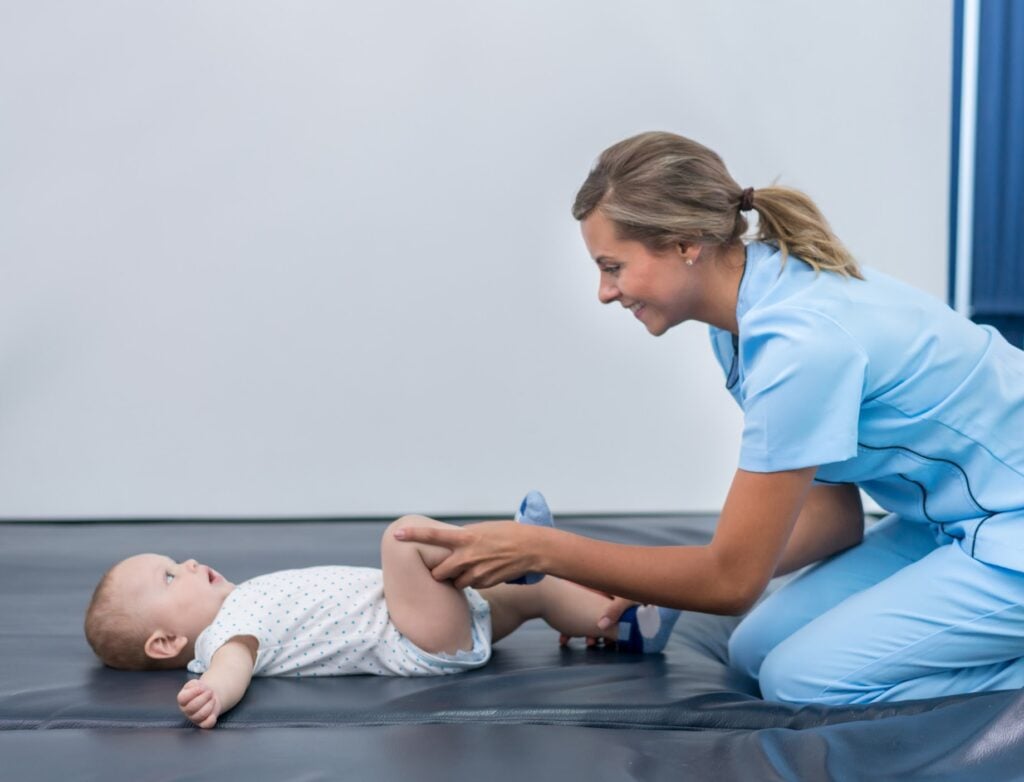
A pediatric physical therapist can evaluate your child’s strength, mobility, balance, coordination, walking pattern, and overall gross motor development. Therapy can then focus on the particular skills your child is working toward.
Depending on your child’s age, treatment, and individual needs, physical therapy can help them:
- Build strength needed for movement
- Improve balance and coordination
- Develop or regain gross motor skills
- Practice safe, age-appropriate ways to move
- Work toward crawling, standing, walking, or other developmental milestones
- Return to everyday activities following surgery when cleared by their medical team
For young children, that work doesn’t have to look like a traditional exercise routine. Our pediatric physical therapists use play and activities that encourage children to practice movement while working toward their individual goals.
How Can I Support My Child at Home?
When your child has hip dysplasia, the best activities for them depend on their age and current treatment. However, there are still plenty of ways you can support your child’s development. Ask your physical therapist about:
- Safe positions for play
- Ways to encourage age-appropriate movement
- Activities you can incorporate into your child’s normal routine
- How to handle or position your child safely while they’re receiving treatment
- Which activities should temporarily be avoided
- How you can practice therapy skills together at home
Your child’s physical therapist can help you find activities that support their development while protecting their hip and following their medical treatment plan.
Helping Your Child Keep Moving Forward
A diagnosis of hip dysplasia doesn’t change your child’s desire to explore, move, and play. They may simply need some additional support along the way.
At Building Futures, our pediatric physical therapists work with children and their families to build strength, mobility, and gross motor skills through individualized, engaging treatment. If your child has hip dysplasia and you’re concerned about their movement or motor development, we’re here to help them work toward the skills they need to participate more confidently in everyday life.