Children learn about their world through movement. They move to explore, play, get where they want to go, and participate in everyday activities with the people around them.
For children with cerebral palsy, differences in movement, muscle tone, posture, balance, and coordination can make some of these activities more challenging. Physical therapy can help your child develop the skills and strategies they need to move and participate as independently as possible.
Because cerebral palsy affects every child differently, physical therapy is individualized around your child’s abilities, needs, and goals. Here are five areas a physical therapist can help your child work on.
Strength
Children with cerebral palsy can have differences in muscle strength and muscle tone that affect the way they move.
A physical therapist can use age-appropriate activities to help your child strengthen the muscles they use for sitting, standing, walking, climbing, and other movements.
For a young child, strengthening might happen through crawling, reaching for toys, or moving between different positions during play. An older child might work on activities such as climbing stairs, getting up from the floor, or navigating an obstacle course.
Balance and Coordination
Balance helps your child maintain control of their body while staying still or moving. Coordination helps different parts of the body work together to complete a movement.
Both can affect activities such as sitting, standing, walking, running, climbing stairs, and playing.
Physical therapists can create activities that challenge these skills at an appropriate level for your child. The goal is to help your child gain greater control and confidence during the movements they use throughout their day.
Gross Motor Skills
Gross motor skills are movements that use the body’s larger muscle groups.
For babies and young children with cerebral palsy, physical therapy can support developmental skills such as rolling, sitting, crawling, pulling to stand, and walking.
As your child grows, their goals can grow with them. Therapy might work on getting up from the floor, navigating stairs, running, jumping, riding a bike, or participating in activities with family and friends.
Mobility and Independence
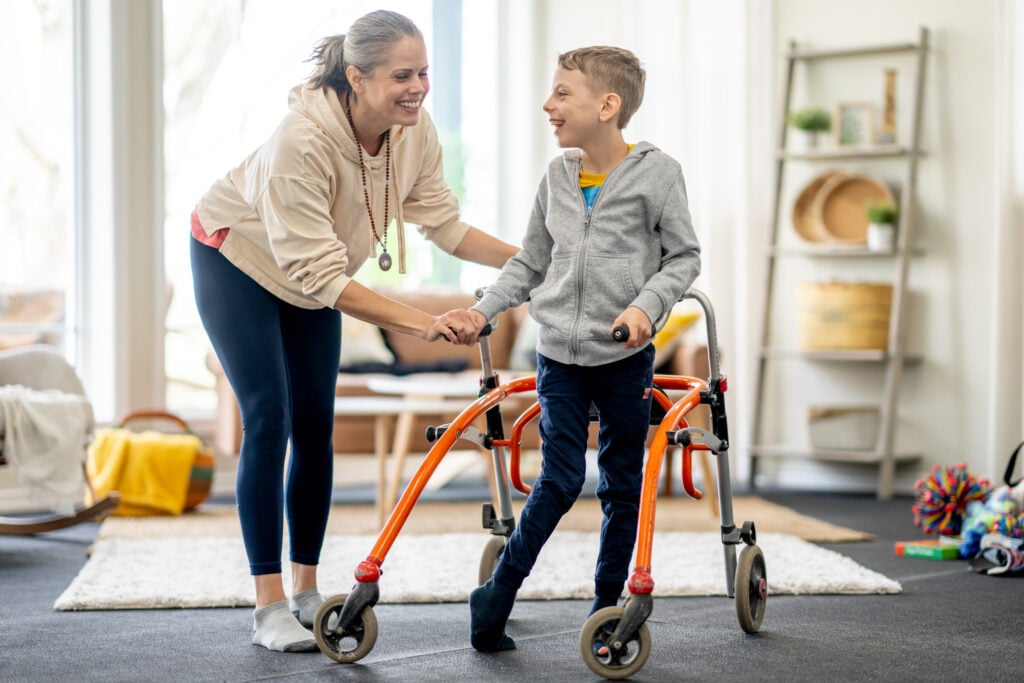
Depending on your child’s needs, their physical therapist can help them learn to move around using the method that works best for them. That could include independent walking or using equipment such as braces, crutches, a walker, or a wheelchair.
A physical therapist can also help determine what equipment could support your child’s movement and teach your child and family how to use it safely.
Movement for Everyday Activities
The skills your child practices in physical therapy have a purpose outside the therapy room.
Your child’s goals might include getting on and off the couch, moving around their classroom, climbing onto playground equipment, getting in and out of the car, or keeping up during an activity with friends.
A physical therapist can work with your family to identify which activities are important to your child and build therapy around the movement skills they need to participate in them.
How Can I Support My Child at Home?
Your child’s physical therapist can show you activities that are appropriate for their individual abilities and goals. You can also look for opportunities to encourage movement during activities your child already enjoys.
Most importantly, follow your child’s physical therapist’s recommendations rather than pushing movements or stretches that haven’t been recommended for them. Children with cerebral palsy have different movement patterns and needs, so home activities should be individualized to your child.
Helping Your Child Move, Play, and Participate
Physical therapy for cerebral palsy isn’t about expecting every child to move in the same way. It’s about helping your child build strength, develop movement skills, and find ways to participate more independently in everyday life.
At Building Futures, our pediatric physical therapists work with children and their families to develop goals based on what matters to each child. Whether your child is learning a new movement skill or working toward greater independence at home, at school, or during play, we’re here to help them keep moving forward.