As a parent, you may find yourself asking this question: “When should my baby start talking?” The truth is that babies communicate long before they use words, and spoken language builds gradually over time. By understanding typical speech milestones and learning how to support your child’s speech development at home, you can help your baby become a strong, confident communicator as they grow.
How Speech Develops in the First Years of Life
Speech development starts well before your baby says their first word. From birth, your baby is learning to speak by listening to voices, watching faces, and engaging through eye contact, gestures, and sounds. Crying, cooing, babbling, pointing, and using facial expressions are all early forms of communication that lay the groundwork for spoken language.
As your baby grows, they begin to understand words before they can say them. They learn the rhythm of conversation through back-and-forth interactions, such as smiling, vocalizing, and responding to familiar voices. Over time, these early skills support the development of words, phrases, and sentences.
Typical Speech Milestones for Young Children
While every child develops speech at their own pace, pediatric speech therapists use milestones to understand how communication skills commonly unfold during early childhood.
Developmental milestones are helpful guideposts, not strict deadlines. Some children reach these milestones earlier, while others take more time. Rather than serving as pass-or-fail markers, milestones provide a framework for understanding what is typical across a wide range of development and can be helpful when questions arise about speech progress.
The following are examples of typical speech development around certain ages.
By around 12 months, many babies:
- Respond to their name and familiar voices
- Understand simple requests such as “come here”
- Use gestures like pointing, waving, or reaching
- Say one or two early words such as “mama” or “dada”
By around 18 months, many toddlers:
- Use a vocabulary of about 10 to 20 words
- Try to imitate simple words they hear
- Use single words to ask for things or express needs
By around 24 months, many toddlers:
- Use at least 50- 100 or more words
- Put two words together, such as “more milk” or “go outside”
- Speech is understood 50% of the time by an unfamiliar listener
- Follow simple, two-step directions
By around 30 to 36 months, many children:
- Speak in three- to four-word sentences
- Are understood most of the time by an unfamiliar listener
- Ask and answer simple questions
- Name common objects and people
Ways to Support Your Baby’s Speech at Home
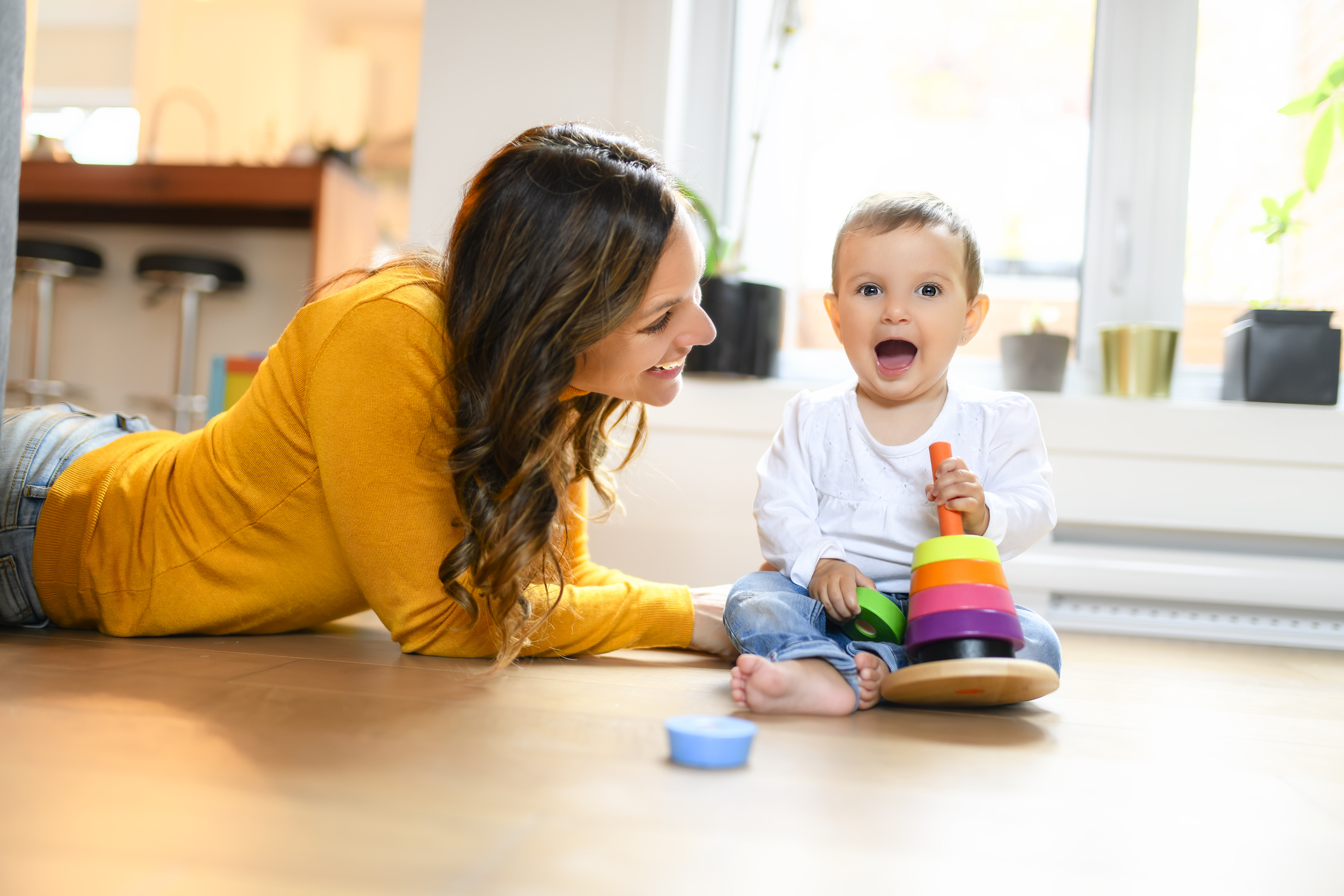
It’s often said that parents are their child’s first teachers, and this is especially true when it comes to speech and language development. From the very beginning, parents provide the back-and-forth interactions that help shape how a baby’s brain grows, processes language, and learns to communicate.
The following strategies offer ways to support early speech development for your child. The goal at this stage is to make communication feel joyful and meaningful for your baby, with a focus on shared interaction rather than on how words sound or when speech “should” happen.
- Use expressive, engaging speech. Using a slightly higher pitch, varied tone, and slower pace engages your baby. This style of communication helps capture your baby’s attention and makes it easier for them to tune into sounds and language.
- Respond to your baby’s sounds. When your baby coos, babbles, or makes sounds, treat it as part of a conversation. Imitating their sounds or responding with words encourages turn-taking and helps establish the back-and-forth pattern that supports later communication.
- Talk through everyday routines. Narrating what you are doing during feeding, diaper changes, or playtime exposes your baby to consistent language. Simple descriptions like “Now we’re putting on your socks” or “Here’s your cup” helps your baby begin to connect words with actions and objects.
- Read and sing often. Looking at books together, even if you are just pointing out pictures, helps build early vocabulary. Singing songs and nursery rhymes introduces rhythm, repetition, and sound patterns that support early speech development.
- Give your baby time to respond. Pausing between phrases gives your baby a chance to process what they hear and attempt to participate with sounds, gestures, or eye contact. These moments help reinforce that communication is a shared experience.
When Speech Therapy May Help
Some young children are late talkers and may rely more on gestures or making sounds before spoken words appear. If your child understands language, responds to their name, uses gestures, and engages socially, they may simply be developing speech at their own pace.
However, if your child consistently falls outside the typical milestone range or seems frustrated when trying to communicate, extra support may be helpful.
You may want to consider a speech evaluation if your child:
- Uses fewer words or sounds than expected for their age
- Rarely imitates sounds or words
- Relies mostly on gestures or vocalizations instead of words
- Has difficulty understanding simple instructions
- Becomes easily frustrated when trying to communicate
- Is difficult for familiar adults to understand as the child gets older
An evaluation with a pediatric speech therapist can provide clarity, help identify your child’s strengths, and offer guidance on how best to support their communication during this important period of early speech development.
What Pediatric Speech Therapy Looks Like
Speech therapy for babies and toddlers is play-based and designed to feel playful, natural and supportive. Therapy focuses on building early communication skills through interaction, routines, and activities that match your child’s developmental level.
Speech therapy may focus on:
- Encouraging early sounds, words, and imitation
- Building vocabulary and combining words
- Improving understanding of spoken language
- Improving speech sounds for improved speech intelligibility
- Supporting social communication and turn-taking
- Sharing strategies parents can use to support speech at home
Learn How Building Futures Can Help Your Child’s Speech Development
If you live in the Monroe, West Monroe or Ruston, LA, areas and have questions about your baby’s speech development, Building Futures is here to help. Call one of our locations or fill out our online form to schedule an evaluation. We look forward to supporting your child’s speech and helping them develop strong, confident communication skills.